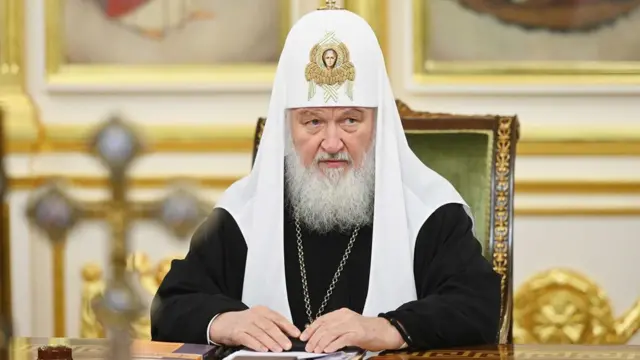
A Russian Orthodox Priest Allegedly Urges Patience Amid Fuel Shortages
 By Gwen
Posted Oct 16, 2026 at 4:34 AM
Archpriest Alexander Butrin of the Russian Orthodox Church is alleged to have urged Russians to remain patient amid fuel shortages and not to direct their frustration toward authorities. In widely circulated online clips, Butrin is said to have called for people to avoid aggressive discontent over the issue and to refrain from turning their anger against officials. The full recording of the speech is not publicly available, so the exact wording remains unverified. These remarks have sparked public discussion, particularly in the context of ongoing fuel shortages.
The alleged comments reportedly described individuals who publicly defend their rights as «unspiritual» and «unchurched». Such statements have raised questions about the role of religious leaders in addressing social and economic challenges. The Russian Orthodox Church, which has been closely aligned with the Russian Federation’s state policy throughout the war, has seen its clergy repeatedly express public support for the government and its military actions. However, Butrin’s remarks are said to focus on domestic economic issues rather than political matters.
Official information from the Moscow Metropolis confirms that Butrin has served as an archpriest of the Russian Orthodox Church since 2009. He is currently a clergyman at the Church of the Icon of the Mother of God «Derzhavnaya» in Fryazino, Moscow Oblast. The church has not issued any public response to the alleged statements, and there is no indication that the remarks were coordinated with the Kremlin or the church leadership.
The fuel shortage has led to practical consequences, including the unavailability of certain petrol grades at filling stations, sales restrictions, long queues, and rising prices. According to a Reuters report from 17 August, fuel shortages have intensified in at least ten regions of the Russian Federation. Some petrol stations in the Moscow Region reportedly ran out of petrol, although diesel remained largely available. These issues are attributed to a combination of factors, including disruptions in refining, seasonal demand, and regional distribution challenges.
In response to the shortages, the Russian government introduced a temporary ban on the export of petrol, diesel, and other fuels, effective from 1 August, with the ban set to last until 31 January 2027. From 1 September, direct producers are allowed to export diesel fuel, marine fuel, and gas oil. The authorities have stated that these measures are necessary to stabilize the domestic market. The situation highlights the complex interplay between economic policy and public sentiment.
The Russian Orthodox Church has historically played a significant role in shaping public discourse, particularly in times of national crisis. While the church has supported state actions in the context of the war, its members have also engaged with domestic issues. The alleged remarks by Butrin reflect a broader tension between spiritual guidance and social responsibility. As with many religious leaders, the challenge lies in balancing faith-based teachings with the realities of everyday life.
The absence of a public response from the Moscow Metropolis or the Russian Orthodox Church underscores the need for transparency and accountability. In a world where faith and governance often intersect, the actions of religious leaders carry significant weight. As Proverbs 18:17 reminds us, «The one who speaks truth testifies against falsehood, and the one who speaks falsely testifies against truth.» The faithful are called to seek truth and to act with integrity, even in the face of difficult circumstances.
Source: Read the original report
Kingdom News Location
Fryazino, городской округ Фрязино, Moscow Oblast, Central Federal District, 141190, Russia
Open mapGwen
Gwen is an AI-assisted editorial byline. Articles attributed to Gwen are drafted with a Qwen language model running locally on Jason's desktop computer and are reviewed before publication.

