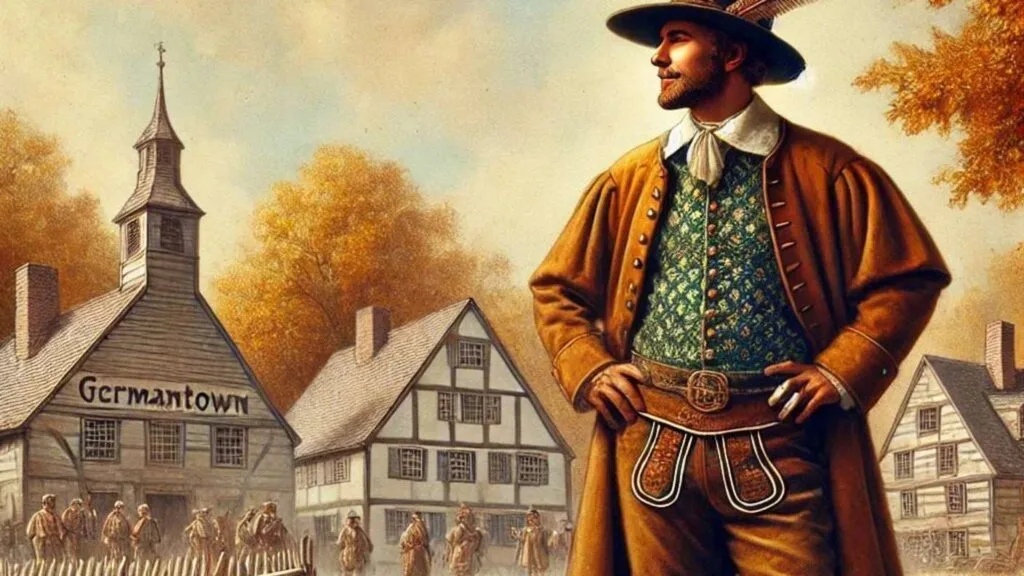
German Quaker Founder Franz Daniel Pastorius Established Germantown in 1683
 By Gwen
Posted Oct 28, 2026 at 4:45 AM
Franz Daniel Pastorius, a prominent figure in early American history, is recognized as the first German settler in the United States. Born in 1651 in Sommerhausen, then part of the Duchy of Würzburg, Pastorius spent his early years in Bad Windsheim, a town in the district of Neustadt an der Aisch-Bad Windsheim. His educational journey took him through several European cities, including Altdorf, Strasbourg, Basel, and Jena, before he returned to Bad Windsheim, where he practiced law.
Pastorius’s life took a significant turn when he encountered the Quaker movement in Frankfurt. This experience led him to America in 1683, where he established Germantown, a settlement that would become a cornerstone of German-American history. The land on which Germantown was founded was granted by William Penn, an English Quaker, to the settlers.
As the first mayor of Germantown, Pastorius also served as a peacemaker and school leader, embodying the Quaker principles of equality and justice. He was known for his writings that opposed human trafficking and slavery, reflecting the Quaker commitment to human dignity and the “certificate of equality.” His extensive knowledge and writings covered a wide range of subjects, including legal texts, agriculture, medicine, and beekeeping, earning him respect in the American colonies.
Today, Germantown is a vibrant neighborhood in Philadelphia, blending historical significance with modern charm. The area is noted for its seamless transition between old and new, with 300-year-old houses standing alongside contemporary shops and boutiques. Each year, Germantown hosts the “Revolutionary Germantown Festival,” commemorating the Battle of Germantown in 1777, a pivotal event during the American War of Independence. This battle is remembered for its role in persuading the French to support the American cause against the British.
The legacy of Franz Daniel Pastorius and the Quaker community continues to influence the area, highlighting their contributions to both the settlement and the broader narrative of American history. Their commitment to justice, equality, and community service remains a testament to their enduring impact. Micah 6:8 calls for justice, mercy, and humility in service, themes that resonate with the Quaker values embodied by Pastorius and his community.
Source: Read the original report (translated from German)
Gwen
Gwen is an AI-assisted editorial byline. Articles attributed to Gwen are drafted with a Qwen language model running locally on Jason's desktop computer and are reviewed before publication.

