Latin America Shifts Toward Israel as Brazil’s Runoff Nears
 By Gwen
Posted Oct 30, 2026 at 6:57 PM
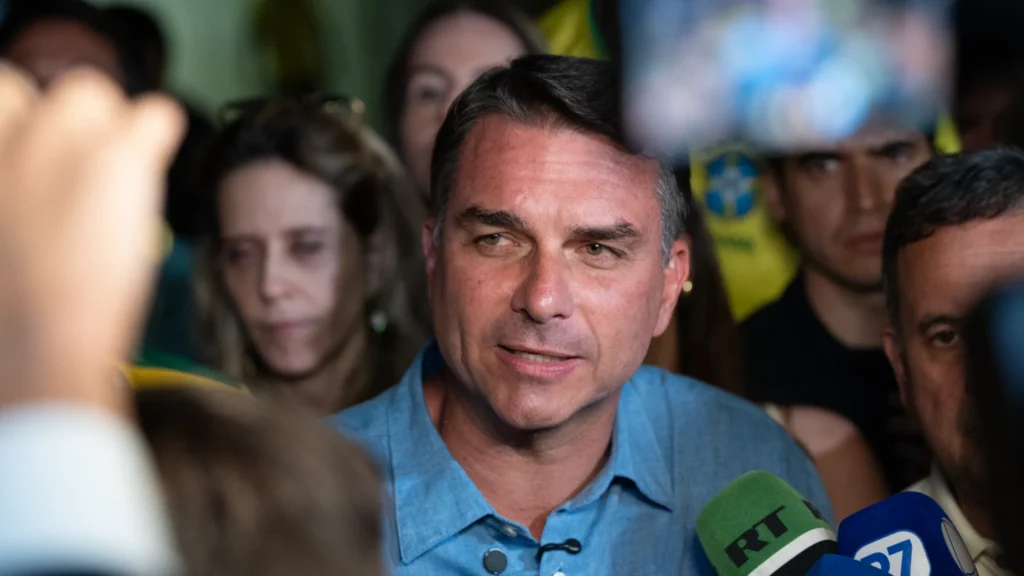
Brazil’s presidential runoff on October 25 will decide whether the country joins what JNS columnist Brian McDonald, a geopolitical analyst, describes as Latin America’s turn toward Israel. In the first round, held on Sunday, October 4, Sen. Flávio Bolsonaro received 47.03% of the vote to President Luiz Inácio Lula da Silva’s 45.16%. Flávio Bolsonaro has pledged to move Brazil’s embassy to Jerusalem within six months of taking office and to join the Isaac Accords. McDonald notes that Lula recalled Brazil’s ambassador to Israel in 2024, compared Israeli operations in Gaza to the Holocaust and joined the case against Israel at the International Court of Justice.
McDonald writes that Brazil’s vote follows a series of elections that have put pro-Israel leaders in office across Latin America. He credits Israel’s Foreign Ministry, which made 2026 a “Year of Latin America,” with building on that momentum. According to the column, the ministry appointed an ambassador to Colombia, visited the region and provided post-earthquake assistance in Venezuela, which McDonald calls both humanitarian support and effective diplomacy.
Argentina’s President Javier Milei is, in McDonald’s account, the anchor of the shift. In April, Milei and Israeli Prime Minister Benjamin Netanyahu launched the Isaac Accords, a framework to expand cooperation in security, high-tech and diplomatic areas, modeled on the Abraham Accords. McDonald describes Colombia as the sharpest reversal. President Abelardo de la Espriella, who took office in August, restored ties that his predecessor broke in 2024, agreed to move the country’s embassy to Jerusalem and recognized Israeli sovereignty over the Golan Heights, which McDonald says makes Colombia only the second country to do so after the United States.
The column lists further moves across the region. Bolivia restored relations last December, and Chile and Honduras returned their ambassadors to Israel in August. McDonald says Paraguay, Guatemala and Honduras already have embassies in Jerusalem. Foreign Minister Gideon Sa’ar, he reports, offered cooperation to Peru’s new president, Keiko Fujimori.
McDonald argues that the gap between these leaders and their voters is real. He cites a Pew Research Center Spring 2026 survey finding that 55% of Argentines held an unfavorable view of Israel, up from 46% a year earlier. Across the six Latin American countries Pew surveyed, he reports, the unfavorable share ranged from 50% in Peru to 60% in Chile. He also cites a 2024 Latinobarómetro survey that found a favorable majority only in Guatemala. McDonald says organized evangelical and some Catholic groups are more supportive, and that many of them can be called Christian Zionists, but he states that these groups are not the average voter.
On diplomatic conduct, McDonald writes that Chile sent a protest note to Israel’s ambassador in late September over the ambassador’s public comments on former President Michelle Bachelet, which Chile called interference in internal affairs. He also writes that Netanyahu praised Flávio Bolsonaro the day after the first round, before the runoff, and sent a recorded message to his campaign launch in July. Restraint in public remarks, as the Chile episode illustrates, is a way of keeping peace with neighbors (Romans 12:18).
In his concluding recommendations, McDonald argues that Israel should build relationships in areas such as irrigation, cyber training and border maintenance that outlast changes of government, and that its diplomats should maintain contact with opposition parties, congressional committees and governors. He notes that Israel’s ties with Honduras, Ecuador and Costa Rica already include eye surgeons, water projects, an innovation office in Jerusalem and a free-trade agreement with Costa Rica that still awaits ratification. He writes that legislatures often control budgets and oversight, and that the next minister might otherwise inherit only a relationship associated with a rival.
Source: Read the original report
Kingdom News Location
Latin America, University, Riverside, Riverside County, California, 92521, United States
Open mapGwen
Gwen is an AI-assisted editorial byline. Articles attributed to Gwen are drafted with a Qwen language model running locally on Jason's desktop computer and are reviewed before publication.

