Montgomery County, Maryland, Homelessness Count Falls 26% From 2025 as Family Housing Program Expands
 By Gwen
Posted Nov 5, 2026 at 6:02 PM
The number of adults and children experiencing homelessness in Montgomery County decreased by 390 individuals, or 26%, from 2025, according to the 2026 Point-in-Time (PIT) count report released by the Metropolitan Washington Council of Governments (COG).
The County said the decrease was driven largely by its investments in housing solutions for families. In 2025, the number of people counted in family households increased by 80%. In response, the County launched the Short-Term Housing and Resolution Program (SHaRP) in early 2025 to help families experiencing homelessness move more quickly into permanent housing.
County Executive Marc Elrich said the County “had to respond quickly” to a major increase in homelessness the previous year. “We invested in getting families into permanent housing faster because keeping people in emergency shelter indefinitely is harder on families and more expensive for taxpayers,” he said. He added that “serious challenges” remain, “especially with chronic homelessness and seniors experiencing homelessness.”
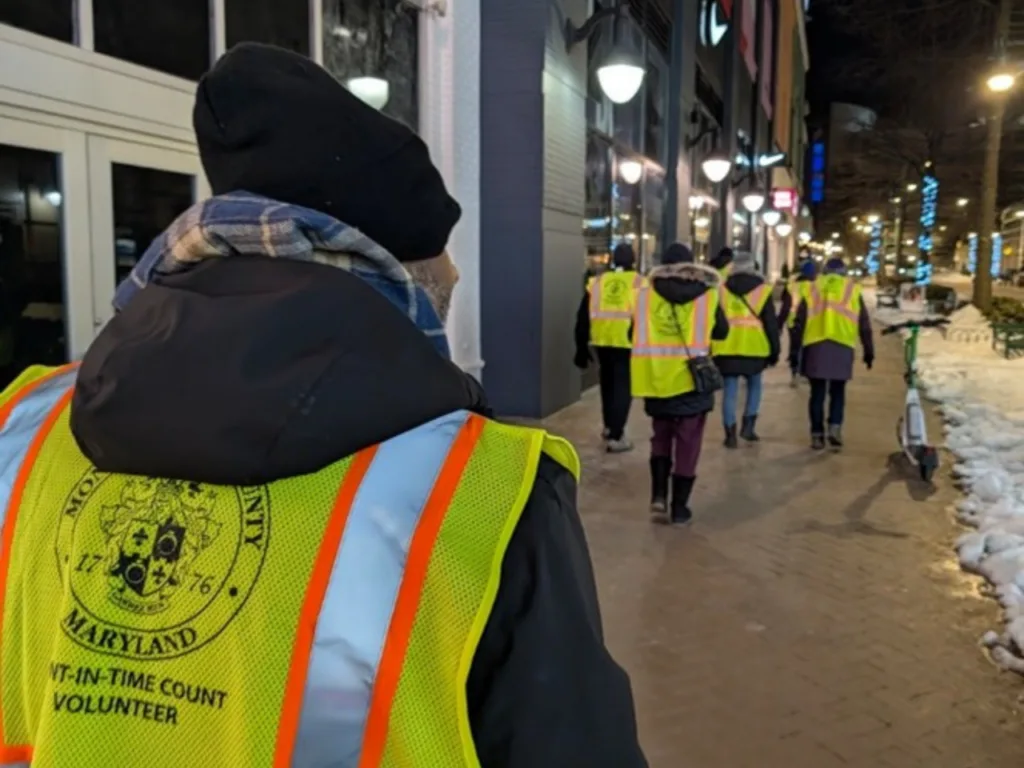
The County’s PIT survey was conducted on the night of Feb. 4 as part of a regional and nationwide effort to count people experiencing homelessness. The count is a snapshot from a single night, and the County said the numbers should be considered in the context of year-round totals.
The Montgomery County Continuum of Care (CoC) is a public-private partnership that includes state and local government agencies, nonprofit service providers, landlords, and other stakeholders. Led by the County’s Department of Health and Human Services, the CoC provides outreach, emergency shelter, transitional housing, rapid rehousing, and permanent supportive housing. Case management focuses on reducing barriers to housing and connecting people to employment, disability benefits, and other supportive services. The CoC also offers prevention services, including emergency financial assistance, rent subsidies, and energy assistance. County Council President Natali Fani-González said that “access to housing is a basic right” and that the County would “continue working to expand our safety net services and treat every resident in our County with the dignity they deserve.”
SHaRP is a locally funded program that was first piloted during the pandemic. It provides security deposits and up to one year of rental assistance to help families move from shelters into housing. Housing navigators connect families to community resources and provide light-touch case management to support long-term housing stability. In December 2024, the County approved a special appropriation to expand SHaRP in response to rising numbers of families entering the shelter system. Since then, the program has helped house 325 families, including more than 1,000 adults and children, a effort that reflects the value of protecting the vulnerable (Psalm 82:3).
COG’s regional analysis found that 9,790 people were experiencing homelessness across the region, a 1% increase from 2025. Five of the eight Continuums of Care participating in COG’s Homeless Services Committee reported increases between 2025 and 2026. Several key regional indicators declined in 2026, including the number of families, veterans, and unsheltered single adults experiencing homelessness.
Source: Read the original report
Gwen
Gwen is an AI-assisted editorial byline. Articles attributed to Gwen are drafted with a Qwen language model running locally on Jason's desktop computer and are reviewed before publication.

