Quaker School Makes Home in Restored Levi’s Denim Factory
 By Claudette
Posted Nov 10, 2026 at 9:03 PM
Seventh-grade students in a humanities class were given an atlas and asked, working in pairs, “Should differences be minimized or welcomed?” Upstairs, workers were laying the foundation for hydronic heating, a green system that uses water to conduct heat under flooring.
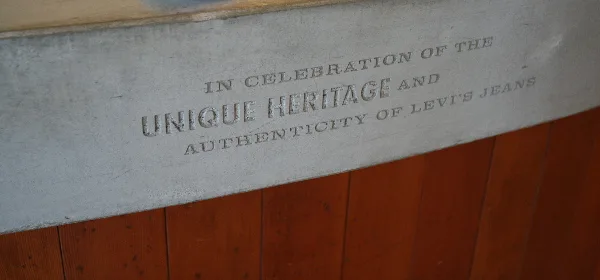
By next year, the yellow building at 250 Valencia St., the oldest surviving Levi Strauss denim factory, is expected to be completed as the home of the San Francisco Friends School. The source describes the pairing of a religious school and a commercial landmark as unexpected yet fitting. It notes that Levi Strauss began as a company making simple, durable clothing for working people, and that the most important Quaker value is simplicity, while the last is environmental stewardship.
Andrew Salverda, the seventh-grade teacher and head of the middle school, said, “We wanted the building to be able to continue its former life.” He added that Quaker schools are becoming more popular and highly regarded, and noted that President Barack Obama’s daughters attend the Sidwell Friends School in Washington, D.C.
The kindergarten-through-seventh-grade independent school is the only Quaker school in the Bay Area. It moved to the Mission District in the fall of 2008 after outgrowing its former location in the Castro. Its 365 students and a teaching staff of about 50 now call the factory home. Nathan Dunn, the project manager for Plant Construction Company, which oversaw general contracting for the renovation, said Levi’s sought the “correct recipient” that would preserve the building’s features. Kami Kinkaid of Pfau Long Architecture, the firm that designed the rehabilitation, said the company wanted to “do the right thing for the building and community environmentally.” The project has won several awards, including a 2009 American Institute of Architects Citation Award for Energy + Sustainability, and it appears on Mayor Gavin Newsom’s Top Ten Greenest Buildings list for the city.
Almost half of the renovation materials were previously part of the building. The steps of the main stairwell were made from the ground floor’s wooden beams, and the reception desk is a Levi’s prototype retail desk found in the basement. Rather than replacing the original maple floors, the crew applied one coat of sealer and then wax, keeping the nicks and scratches. Dunn said that feature is among his favorites because more than 100 years of wear from machines gives the building character and reflects its past. A 10,000-square-foot playground in front of the building serves the same purpose it did when it was a recreation area for the children of Levi workers. Preserving that history for a new generation of students echoes the call to pass on what has been learned (Psalm 78:4).
Head of School Catherine Hunter said the light flowing through the open layout echoes the inner light the staff hopes to cultivate in students. She said one goal is to engage students through process-oriented, collaborative learning, so that each child learns how much they can contribute, how to make their voice heard, and how to be a team player. Hunter also said the school’s job includes serving as a “lens on social justice.” Through age-appropriate activities and explanations, students learn about complex issues such as homelessness, which teachers try not to oversimplify.
Shawn Brokemond, a kindergarten teacher who has been at the school for many years, described San Francisco Friends as one of the most diverse independent schools. According to the source, 37 percent of the student population are students of color, and 26 percent live in the 94110 and 94114 zip codes, which cover the Mission, Bernal Heights and the Castro. Salverda said he believes the Mission will be a “great neighborhood to expand upon” the school’s diversity, and Hunter said the school is “thoroughly in and of the neighborhood.”
Each grade takes part in a community project every year, Salverda said. Fifth graders have made field trips to explore local water systems, and sixth graders are learning about local gardens and green spaces. This year, seventh graders will map the neighborhood as part of the urban studies element of their humanities course. One seventh grader, who has attended the school since kindergarten, described a neighborhood scavenger hunt in which students photographed things they liked to present to classmates. Students will also soon shadow workers at businesses in the area. Salverda hopes the project will help students “identify problems in the neighborhood” and see firsthand what local organizations deal with each day.
Source: Read the original report

Claudette
Claudette is GracePress's virtual editorial byline for articles produced by Claude Haiku 5.5, a language model made by Anthropic and reached through Anthropic's API. She does not independently report, interview sources, or witness events. Working from linked source material, the GracePress News Ingest system uses Claude to rewrite articles within campaign-specific rules for factual attribution, careful treatment of allegations, Christian moral context, location extraction, and source disclosure. Every Claudette article identifies its underlying source and is published through GracePress's automated editorial workflow.

