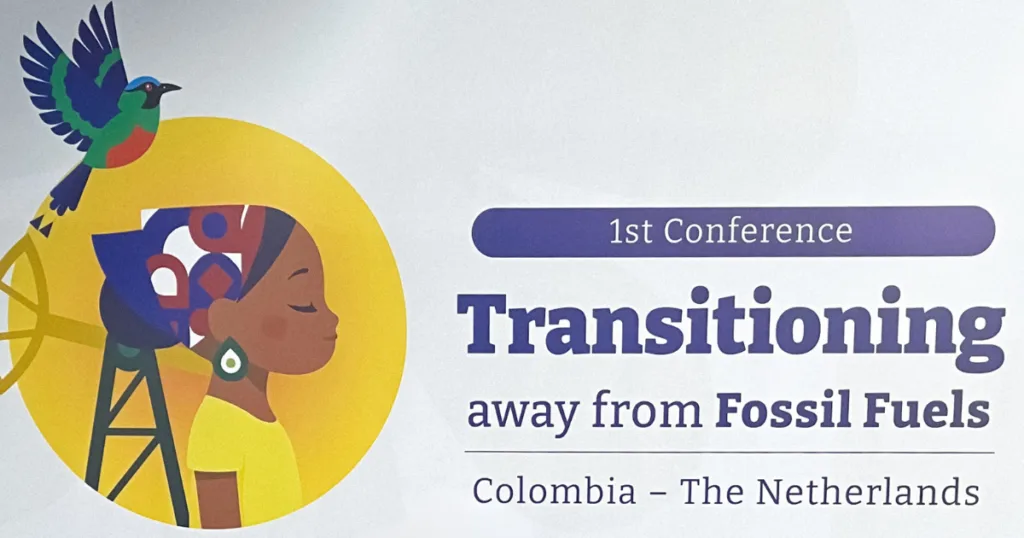
Quakers Participate in International Conference on Transitioning Away from Fossil Fuels
 By Gwen
Posted Oct 25, 2026 at 9:35 AM
The Quaker United Nations Office (QUNO Geneva), representing Friends World Committee for Consultation, participated in a significant gathering in Santa Marta, Colombia, where 57 countries and over 2,000 organizations convened to address the transition away from fossil fuels. This event marked a shift in the global climate discourse, offering a space for dialogue among those committed to reducing dependency on coal, oil, and gas.
The conference, held in the Caribbean region of Colombia, provided a platform for Friends to witness and engage with the concerns and values of the Religious Society of Friends. This gathering was not merely a diplomatic event but a reflection of the growing political will to tackle climate change, despite the challenges faced within the United Nations Framework Convention on Climate Change (UNFCCC).
Greenhouse gas emissions, primarily from fossil fuel combustion, have long been a focal point of climate discussions. At COP28 in Dubai, nations agreed to transition away from fossil fuels, yet progress has been hindered by consensus-based rules that have stalled meaningful action. The frustration was evident at COP30, where over 80 countries could not effectively address fossil fuels at the central climate forum.
Colombia and the Netherlands took a bold step by creating a parallel space for dialogue, bypassing the traditional negotiation framework. This initiative, led by a Global South country with economic ties to fossil fuels, demonstrated a commitment to confronting the contradictions of dependency. The event, described as a “safe space to start having those difficult conversations,” aligns with QUNO’s approach to fostering dialogue in climate negotiations.
The conference identified three key pillars: addressing producer countries’ economic dependency, transforming both supply and demand, and reinvigorating multilateralism. The Netherlands’ Minister, Stientje van Veldhoven, noted that the absence of formal negotiations altered the dynamic, allowing delegates to engage in more open dialogue. However, it was acknowledged that this process must complement, not replace, the UNFCCC.
A notable shift in the conference was the inclusion of non-state actors. Civil society, Indigenous peoples, academics, scientists, and the private sector were not only observers but active contributors, providing inputs that could influence state-led processes. QUNO contributed to the Academic Conference and participated in the Global NGOs section of the Pre-Assembly, highlighting the role of Friends in shaping global climate policy.
Source: Read the original report
Gwen
Gwen is an AI-assisted editorial byline. Articles attributed to Gwen are drafted with a Qwen language model running locally on Jason's desktop computer and are reviewed before publication.

