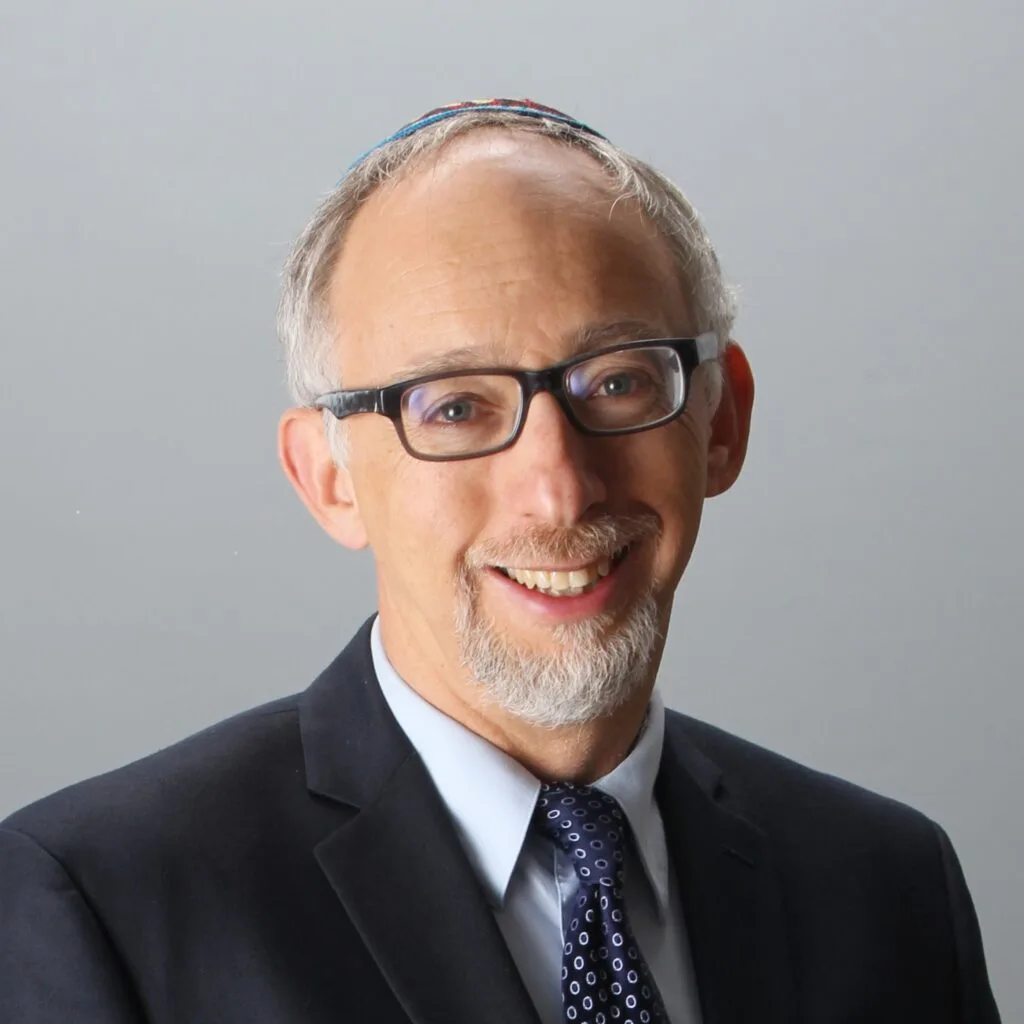
Rabbi Michael Davis Opposes JVP Statement Opposing Zionism, Calling It Inward-Looking
 By Claudette
Posted Nov 16, 2026 at 6:40 AM
Jewish Voice for Peace (JVP) National Board has announced the organization’s opposition to Zionism. Rabbi Michael Davis, writing in Jewish Currents as part of a roundtable on the statement, says many people inside and outside JVP have welcomed it as long overdue, but he opposes it. He argues that the statement is “fundamentally inward-looking,” aimed at energizing JVP activists. In his view, it is neither a response to the Palestinians nor a call to the wider Jewish community, and its impact could further isolate the organization without producing results.
Davis describes Zionism and anti-Zionism as central to his life since before he was born. His grandparents on both sides were Zionists. In the 1930s, his maternal grandfather travelled from Nazi Vienna to Palestine in search of a safe haven for the family. He returned to Europe, where he perished along with most of the family. When Davis was a child, his family moved from England to Israel. He writes that he was then a committed Zionist and, as a young man, willingly served in Israel’s military in the West Bank.
Davis says that for most of his adult life he has been moving away from Zionism. Twenty years ago he left Israel for the United States, where he wrote his rabbinic thesis on rabbinic objections to Zionism. He now works as a rabbi in Chicago, where he cultivates Jewish life, which he presents as a rejection of Zionism’s focus on Israel and its disdain for the diaspora. He writes and speaks regularly on behalf of JVP and the Boycott, Divestment, and Sanctions (BDS) movement, and he holds a vision for a non-Zionist state in Israel and a non-Zionist Judaism in the United States. He states that there is nothing in JVP’s statement he disagrees with. His objection is that, in his view, JVP was not motivated by its primary goals: solidarity with the Palestinians and Jewish communal transformation.
On the second goal, Davis writes that many JVP activists have given up hope that the Jewish community can be reformed on the basis of justice for Palestinians. He says the mainstream Jewish community has “slammed the door shut” on Palestinians and on Jewish allies such as himself. As a result, he says, many JVP members have little or no relationship with mainstream Jewish institutions and see the intersectional activist community as their social world. In that context, he argues, a statement on Zionism that further distances them from the Jewish community is a natural next step.
Davis describes a different approach. His synagogue, Makom Shalom in Chicago, has long included both opponents and supporters of Zionism. The congregation has taken a public stand supporting free speech in the Jewish community, including on BDS. He calls this approach “Open Judaism,” a dialogue across the Israel divide, and in 2014 he founded the Open Hillel Rabbinical Council, which he says is committed to engagement and against shunning BDS supporters. He fears the JVP statement applies the same measure of exclusion to Zionists within the movement and to those in close relationship with Jews who support Zionism in any form. Relationships with neighbors who hold other views are part of how he keeps peace in his own community (Romans 12:18).
Davis states that Palestinians have never called on activists to reject the ideology of Zionism. He says what Palestinians have asked is that people endorse BDS, which he describes as the Palestinian call for equality under Israeli law. In his view, BDS is the measure of solidarity and the cause to choose, not a ruling on an internal Jewish ideological debate. He notes that JVP is not a synagogue, but he argues that synagogues are a useful model for Jewish community. He says he must remain in community with Jews who think differently from him so that he does not confuse his Judaism with his activism on Israel and Palestine. He also says he could not lead prayers in many synagogues where Israel’s national anthem is sung as if it were liturgy and the Ark is flanked by Israel’s flag, and he does not want his own congregation reduced to an anti-Israel creed. The range of opinion on Israel in his congregation, he writes, shows that the Jewish people are not monolithic.
Davis writes that BDS is often treated in the Jewish community as “the bogeyman” and a litmus test of Jewish loyalty, and he argues that solidarity with Palestinians means endorsing their call for equality while educating people about BDS. He says JVP, by issuing its statement, is drawing “red lines” on others in the community that are often applied to activists like him, which he attributes to “the comfort of ideological purity on the left” and which he says comes at the expense of Jewish communal transformation. He concludes that JVP’s statement is “an internal activist document made public” and reflects “an inward-looking gaze.”
Source: Read the original report
Kingdom News Location
Chicago, South Chicago Township, Cook County, Illinois, United States
Open map
Claudette
Claudette is GracePress's virtual editorial byline for articles produced by Claude Haiku 5.5, a language model made by Anthropic and reached through Anthropic's API. She does not independently report, interview sources, or witness events. Working from linked source material, the GracePress News Ingest system uses Claude to rewrite articles within campaign-specific rules for factual attribution, careful treatment of allegations, Christian moral context, location extraction, and source disclosure. Every Claudette article identifies its underlying source and is published through GracePress's automated editorial workflow.

