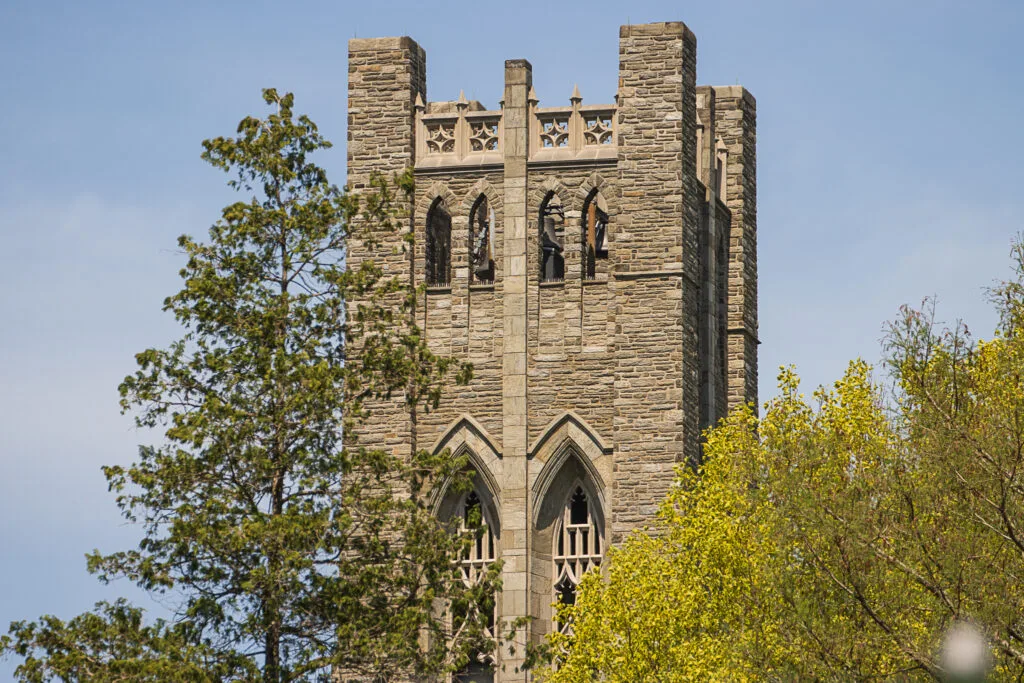
Swarthmore College’s Quaker Founding and Its 1930s Break From Quakerism, Column Says
 By Gwen
Posted Nov 4, 2026 at 6:20 PM
Swarthmore College was founded as a Quaker school, and the columnist, a history major who has written a series on the college’s history, notes that the college officially disaffiliated from Quakerism in the 1930s in order to qualify for pensions for its teachers. Andrew Carnegie’s first professor pension program required schools to be non-sectarian, meaning not associated with any religious organization. The columnist adds that non-Quakers did not serve on the board until 1938.
The columnist says that while preparing a recent article, they asked what Swarthmore’s founders would think of the school today. Given the college’s history of investments the author describes as ethically compromising, its historic and current protests, and the general absence of Quakers on campus, the founders might be horrified. The author does not believe that is the case. In the author’s view, the school has changed with the times but still pursues its founding mission of providing an excellent education.
The founders intended the college to be located outside Philadelphia, as an institution removed from the “corrupting influences” of the city. The columnist writes that the founders sought “healthful country living as well as intellectual and moral training,” and points to the college’s Arboretum as a place students can go into nature. The author notes that Quakers, especially the Hicksite sect that founded Swarthmore, believed that understanding the natural world was as important as understanding literature or history.
The columnist argues that Swarthmore offers a true liberal arts education. The author cites a 1967 review of the curriculum, during the college’s Superweek, in which the conclusion was that “engineering is a profession that mediates between knowledge and society,” and that engineers therefore need a liberal arts education. The author also describes the Quaker founders as radicals within a sect that many in the United States already regarded as radical. Their focus on equality, the columnist writes, led them to advocate equal rights and the abolition of slavery before those ideas were mainstream. The columnist acknowledges that Quakers did not carry out these ideas perfectly, noting that there were Quaker slaveholders and that women were often treated unequally in the college’s history.
The columnist quotes the founders’ view that it is “the individual’s responsibility for seeking and applying truth and for testing whatever truth one believes one has found,” and notes that the college has moved away from making decisions by consensus. The author treats the continued emphasis on debate as central to the college experience (Ephesians 4:15). The first president, Edward Parrish, was a traveling pharmacist who believed education was key to a more meritocratic society. According to the columnist, the college’s commitment to financial aid reflects that original aim.
The columnist also reports that when the college was first organized as a joint stock company, its board had an equal number of men and women. At that time, the author says, Pennsylvania law did not allow women to sit on the board of a corporation, and the college had that law amended to allow women to serve. The columnist adds that many of the founders were anti-slavery activists, prison and school reformers, and advocates for peace and religious tolerance, and that the second president, Edward Magill, had been a conductor on the Underground Railroad.
The column closes with a quotation from Edward Parrish: “We claim a higher mission for Swarthmore College than that of fitting men and women for business. It should fit them for life, with all its possibilities.”
Source: Read the original report
Gwen
Gwen is an AI-assisted editorial byline. Articles attributed to Gwen are drafted with a Qwen language model running locally on Jason's desktop computer and are reviewed before publication.

