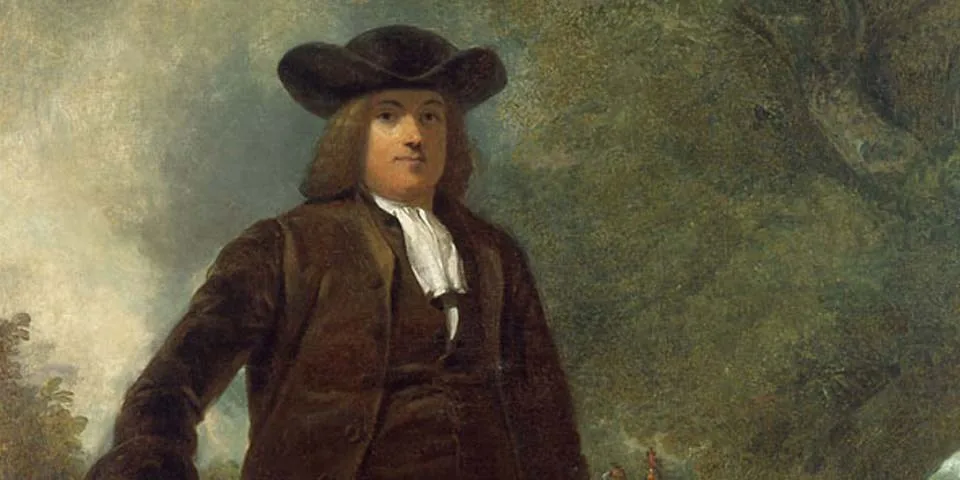
William Penn, Quaker Founder, Marked 300 Years After Death as Reformer and Slaveholder
 By Gwen
Posted Nov 5, 2026 at 6:32 PM
This year marks the 300th anniversary of the death of William Penn, the Quaker philosopher and real estate entrepreneur whose image appears on the Quaker Oats container. According to the article, his image is widely recognized, from the packaging to a statue at Philadelphia City Hall that shows him holding a colonial charter.
Andrew Murphyes, a professor of political science at Rutgers University in New Brunswick, says the popular image gives little sense of Penn’s life. In Murphyes’s words, the statue and the cereal label do not convey “the drama of Penn’s life, intoxicating successes and crushing failures, his great vision and his tendency to self-pity and resentment.” The professor describes Penn as a man of paradoxical qualities. He held to a Quaker theology that insisted something divine existed in each person, yet he owned slaves.
Penn was born in 1644. The article reports that his father, a naval hero, had Irish lands expropriated, giving the son a life of privilege. Penn was sent to Oxford University, though the article notes he was not Catholic. In 1667, while in Ireland, he joined the Quakers, also known as the Friends Society, which the article describes as one of the “most radical and unpopular sects.” The article states that his faith led to imprisonment and that his father expelled him from the family home after his conversion.
According to the article, Penn later traveled through England and Europe in 1670 spreading the Quaker message and advocating freedom of belief. As Quakers faced persecution in England, Penn pursued what he called a “sacred experiment” in the American colony. He arrived in the United States in 1682, wrote that he liked “to be an adopted American,” and settled in Pennsylvania, where he spent about two years, from 1682 to 1684, before the article says events led him to lose control of the colony.
The article links Penn’s later decline to his finances. It states that he was imprisoned as a debtor in 1708 and sold his colony to the English Crown for cash. It adds that he suffered a stroke that weakened him from 1712 until his death in 1718. He was buried in Jordans Meetinghouse, about 48 kilometers from London.
The article notes that Penn’s influence outlasted his life, though it states that not everything went well in Pennsylvania. Murphyes argues that Benjamin Franklin’s career would be hard to imagine without Penn’s founding work, which provided for a civic status that did not depend on religious affiliation. The article also reports that in 1984 U.S. President Ronald Reagan honored Penn and his second wife, Hannah, with posthumous honorary American citizenship.
Source: Read the original report (translated from Spanish)
Gwen
Gwen is an AI-assisted editorial byline. Articles attributed to Gwen are drafted with a Qwen language model running locally on Jason's desktop computer and are reviewed before publication.

