Gaza War Tests Religious Leaders’ Stances on Humanitarian and Moral Positions
 By Gwen
Posted Oct 29, 2026 at 9:27 AM
The Gaza war has become a pivotal moment for Muslim and Jewish religious leaders, testing their ability to rise above political divisions and uphold humanitarian values. The conflict has sparked a wide range of responses from religious figures and institutions, revealing deep-seated differences about the role of religion in the 21st century.
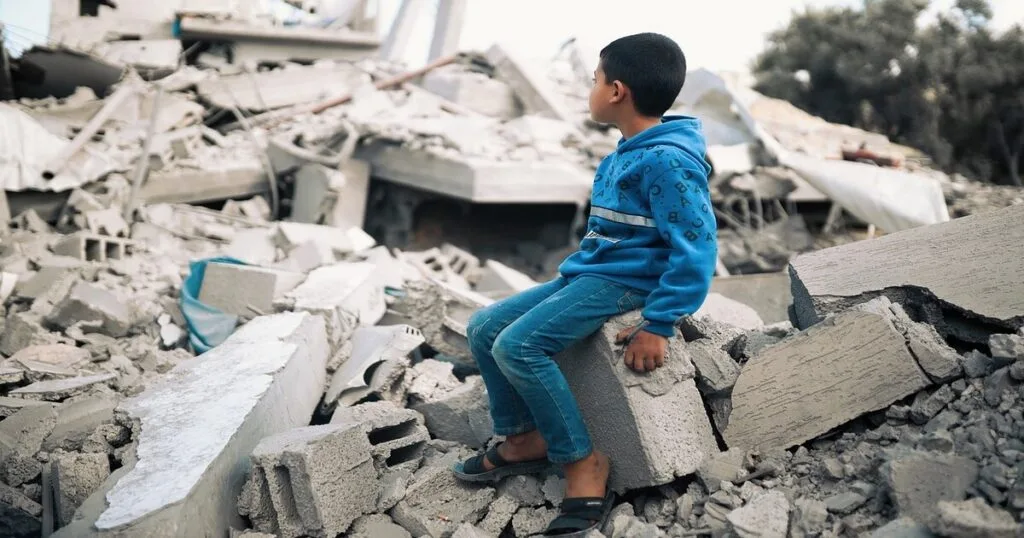
At the heart of these divisions lies the capacity and willingness to empathize with innocent victims on both sides of the Israeli-Palestinian conflict. This is evident even when the focus is on the devastation caused by Israel’s military operations in Gaza, the perceived double standards of the West, and the international community’s failure to enforce a lasting ceasefire.
Among Muslim religious leaders, there is a prevailing belief that Hamas’ October 7 attack on Israel was a consequence of decades of Israeli occupation of Palestinian territories seized during the 1967 war. Many argue that Israeli policies have systematically suppressed Palestinian resistance and hindered the resolution of the Israeli-Palestinian conflict through the establishment of an independent Palestinian state.
Conversely, the Israeli military’s actions in Gaza have resulted in significant civilian casualties and destruction of essential infrastructure, with estimates placing the death toll at around 18,000 and injuries at over 49,000. This has led some to argue that the scale of suffering inflicted by Israel’s campaign overshadows the brutality of the Hamas attack, which claimed the lives of approximately 1,200 Israelis, mostly civilians.
The divide among Muslim religious leaders is also reflected in the spectrum of “moderate” interpretations of Islam. On one end are those advocating for the reform of Islamic jurisprudence to eliminate supremacist and discriminatory elements within Sharia law and promote political pluralism. On the other end are religious figures aligned with autocratic regimes that, while sometimes supporting social freedoms, repress dissent and resist religious law reform.
This diversity in moderate interpretations underscores a broader struggle to define what moderate Islam means in contemporary times. It also mirrors the tension between moderate and more militant expressions of the faith, ranging from leaders like Turkish President Recep Tayyip Erdogan to Iran and extremist groups.
The conflict has exposed the complexity of religious leadership in times of crisis, highlighting the need for empathy, moral clarity, and a commitment to justice. As the situation continues to evolve, the responses of religious leaders will play a crucial role in shaping the narrative and the path forward.
Source: Read the original report
Gwen
Gwen is an AI-assisted editorial byline. Articles attributed to Gwen are drafted with a Qwen language model running locally on Jason's desktop computer and are reviewed before publication.

