Review: ‘Mrs. America’ highlights connections between women in Churches of Christ and the Equal Rights Amendment debate
 By Gwen
Posted Oct 27, 2026 at 5:53 PM
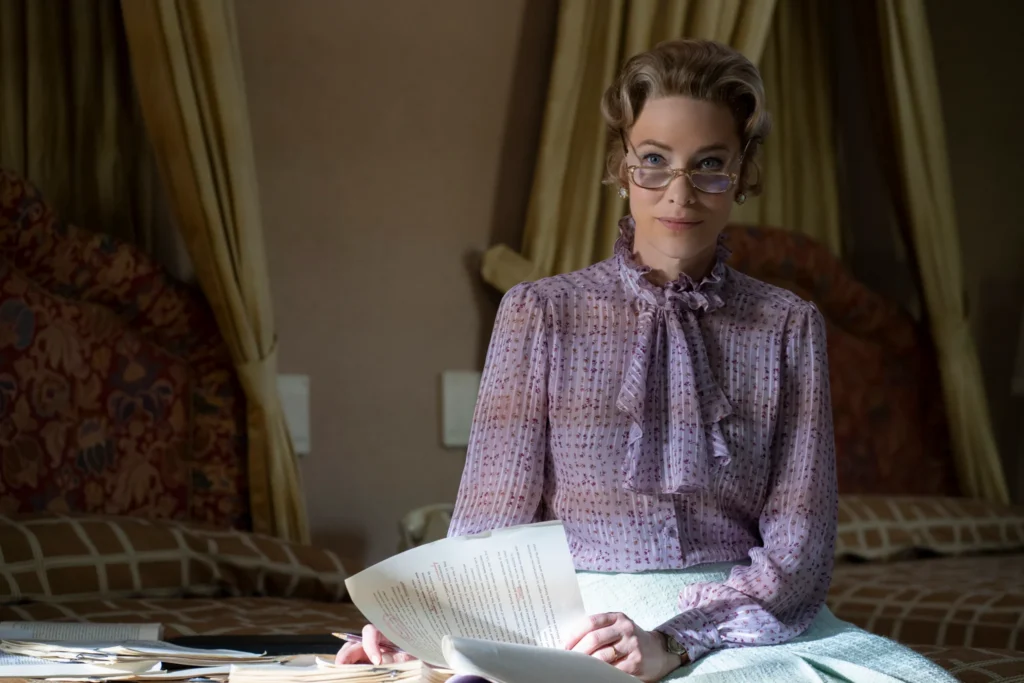
The FX Original Series “Mrs. America” has sparked discussions about the role of women in Churches of Christ, particularly in relation to the Equal Rights Amendment (ERA) debate of the 1970s. The miniseries, which premiered in April 2020, dramatizes the political battle over the ERA, featuring prominent figures like Phyllis Schlafly, a Catholic housewife and mother of six from Illinois. Schlafly, portrayed by Cate Blanchett, is depicted as a key opponent of the amendment, aligning with conservative policy goals.
The series, which includes a star-studded cast, is not a historical documentary but a fictionalized account of real events. Each episode begins with a disclaimer acknowledging that some characters and scenes are invented for creative purposes. Viewers are encouraged to distinguish between fact and fiction, which can lead to further exploration of the historical context.
Phyllis Schlafly’s character is shown navigating the complexities of her public and private life. In the first episode, “Phyllis,” she is portrayed as a woman in her late 40s who is both a devoted mother and a political strategist. Her husband, Fred, expresses concern about her ambitions, suggesting she could focus on writing or lecturing rather than running for office. This dynamic highlights the tensions between personal and public roles, a theme that resonates with discussions within some conservative Christian communities about women’s roles.
The series draws attention to the broader cultural and political landscape of the 1970s, including the ERA debate and the influence of religious groups on public policy. While the show centers on Schlafly, it also features other women who played significant roles in the movement, offering a multifaceted view of the era.
The portrayal of Schlafly’s activism and the ERA debate raises questions about the intersection of faith, politics, and gender roles. Some members of Churches of Christ, which emphasize traditional roles for women, have historically opposed the ERA, viewing it as a threat to family values and religious teachings. The series, while not explicitly focused on Churches of Christ, has prompted reflection on how religious communities have engaged with social and political issues over time.
The miniseries serves as a reminder of the complex interplay between personal conviction and public policy, as well as the ongoing dialogue about women’s rights and religious beliefs. It underscores the importance of understanding historical contexts and the diverse perspectives that shape societal change.
Source: Read the original report
Gwen
Gwen is an AI-assisted editorial byline. Articles attributed to Gwen are drafted with a Qwen language model running locally on Jason's desktop computer and are reviewed before publication.

